







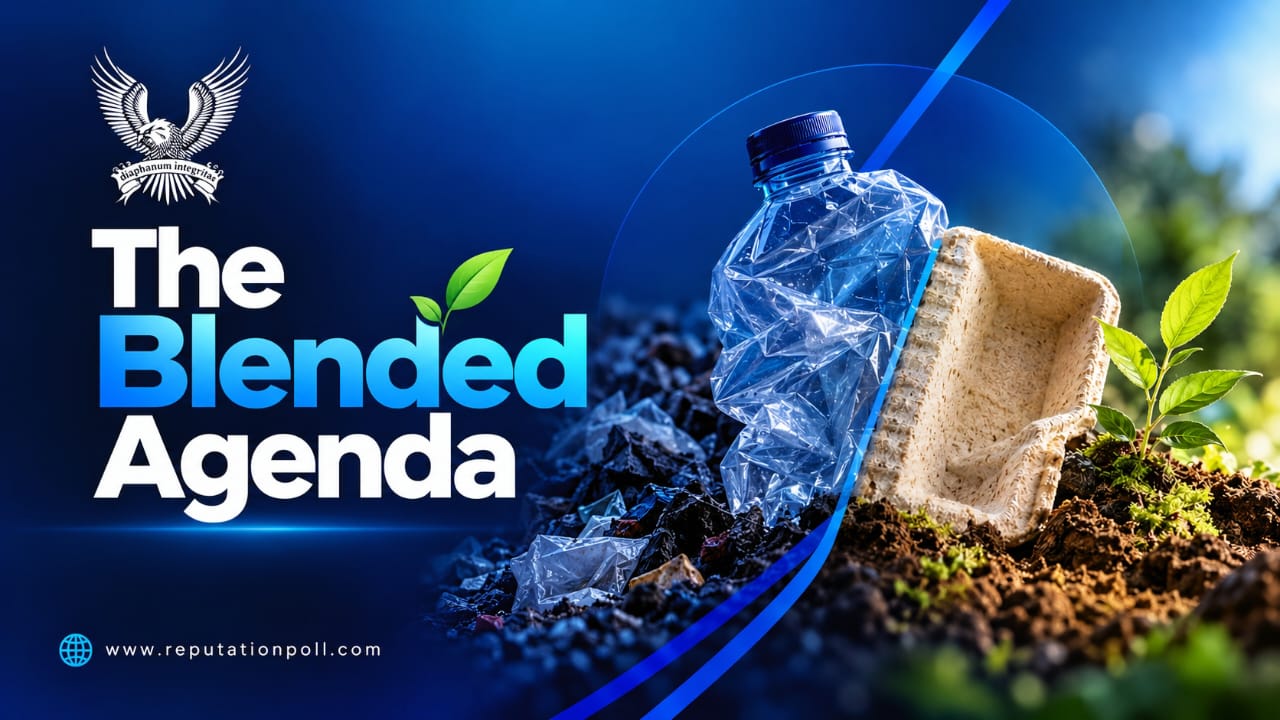
Packaging is designed to protect what we buy. But, guess what is often left unprotected after it has served its purpose and is disposed of? The environment.
Plastic packaging eventually becomes waste, and packaging accounts for about 40% of global plastic waste. According to the OECD, only 9% of plastic waste was ultimately recycled in 2019, after accounting for losses and residues. Almost half went to sanitary landfills, while another 22% was mismanaged, including waste that was burned in the open, dumped in uncontrolled sites or leaked into the environment.
So while a package may be technically recyclable, that does not necessarily mean it will actually be recycled. It still needs to be collected, sorted and processed, and there needs to be a market for the usable material. This gap between what is technically possible and what actually happens is why some companies are beginning to rethink packaging.
What if a package did not need a complex recycling system to have a better retirement?
Shellworks is an example exploring this idea through microbiology. Its material, Vivomer, is made through a fermentation process using plant waste. According to Shellworks, Vivomer is a bio-based alternative to plastic that is designed to break down when microorganisms encounter it in natural environments. The company says the material leaves no microplastics or toxic chemicals behind.
That is a very different way of thinking about packaging.
Ecovative is another example. The company developed Mushroom® Packaging, a protective packaging material made by growing mycelium through agricultural byproducts. The mycelium binds the plant material together, allowing it to be grown into shapes designed to protect specific products. Here’s what’s interesting.
According to Ecovative, its Mushroom® Packaging can be placed in the garden after use, where it breaks down and returns nutrients to the soil.
The significance of these ideas goes beyond packaging. They challenge us to think about sustainability before a product becomes waste, rather than waiting until disposal to ask how can we fix what went wrong.
Packaging has traditionally been judged by what it does at the beginning of its life: Does it protect the product? Is it lightweight? Is it affordable? But perhaps we should also be asking what happens at the end. Because a sustainable package should not only protect what is inside it. It should also consider how it affects what’s around it . And this may be where the real packaging innovation is happening: not simply in making materials that can be recycled, but in designing materials that has a beautiful blended life with the environment.
So, to all it may concern, protect, brand, and contain your product, make it functional, decorative, durable, affordable and easy to transport but don’t forget the planet while you’re at it.


