








A potentially world-changing idea sprang from an excursion boat that got stuck for five hours on Lake Naivasha.
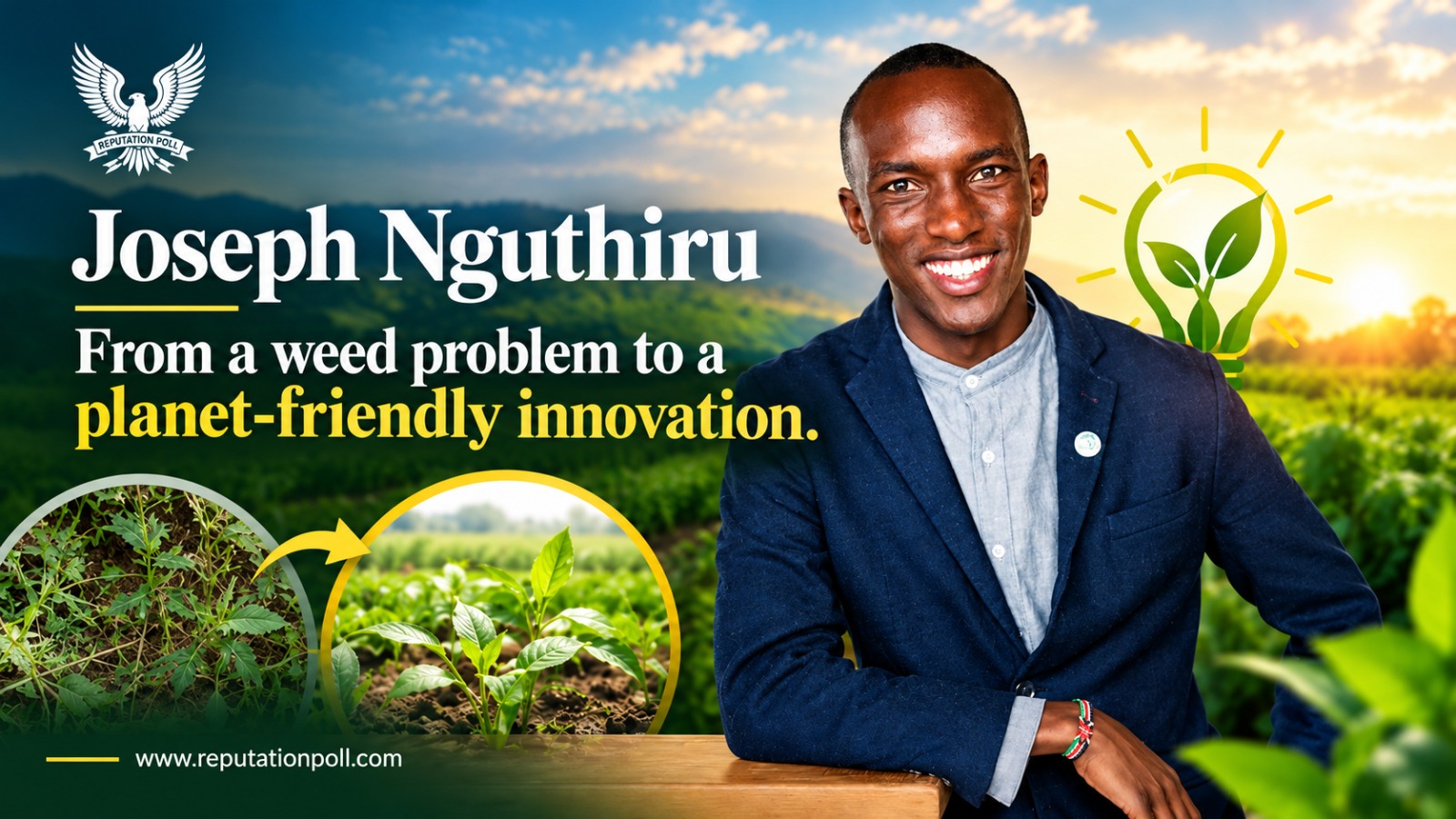
From a frustrating encounter with water hyacinth, Joseph Nguthiru, then an engineering student at Egerton University on a class trip, saw an opportunity. He immediately jumped on it and started a project that involved finding a way to use this invasive plant, which chokes oxygen from lakes, affects aquatic life, disrupts navigation, and impacts the livelihoods of fishing communities, to make something useful while still protecting the environment.
Instead of simply seeing the weed as just a problem to be removed, Nguthiru began to see it as a resource that could be turned into a product that could both help address the hyacinth problem, which affects countries around the world, while reducing reliance on conventional plastic packaging.
This problem, which he redirected his entire academic project towards, became HyaPak, a company that turns harvested water hyacinth into biodegradable packaging.
The process begins with harvesting the weed, which HyaPak sources with the help of fishermen, fisherwomen, and lakeside communities around affected waterbodies. The hyacinth is dried and processed into a plant-based raw material, which is then formed into packaging. HyaPak’s products include seedling bags, parcel packaging, and carton liners designed as alternatives to conventional plastic packaging. These products can be used in several ways, one of which is agriculture.
Traditional seedling bags are made from plastic and have to be removed before planting. HyaPak’s seedling wrappers are designed differently. Farmers can plant the seedling, wrapper and all.
The wrapper is designed to hold its shape during the nursery stage and then biodegrade in soil. HyaPak says its seedling wrappers decompose in about six months, while its broader range of products biodegrades within roughly three to twelve months, depending on the product and conditions. The company also says the wrappers release nutrients, including nitrogen and phosphorus, as they break down.
This connects HyaPak’s innovation with Kenya’s Jaza Miti initiative, the government’s national tree-growing and landscape-restoration programme, which aims to grow 15 billion trees by 2032. HyaPak’s biodegradable seedling wrapper has been presented as part of Kenya’s Jaza Miti reforestation programme.
The significance is bigger than simply replacing one type of bag with another. The same invasive weed creating an environmental and economic problem can become a raw material for a product designed to address another environmental problem: plastic waste.
HyaPak isn’t staying local. Its model is designed to travel to other regions where water hyacinth is an invasive problem. The company has described its work as having global potential, while its partnerships and pilots extend beyond Kenya.
HyaPak has also expressed an intention to open-source parts of its process, with the broader goal of enabling entrepreneurs in other regions affected by water hyacinth to build locally relevant versions of the model.
Nguthiru’s work has since received international recognition. In 2025, he was named a UNEP Young Champion of the Earth, with UNEP recognising his work through HyaPak, which produces biodegradable packaging from water hyacinth pulp.
What started as a five-hour inconvenience on a lake became something much bigger: an innovation that turns one environmental problem into a potential solution for another. This is what ownership looks like. Seeing a problem and not wishing it away or hoping someone fixes it, but rising to the occasion and deciding, “I will do something about it.”


