
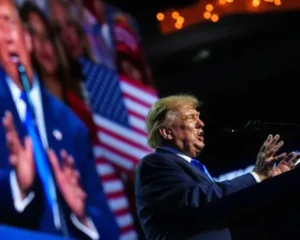








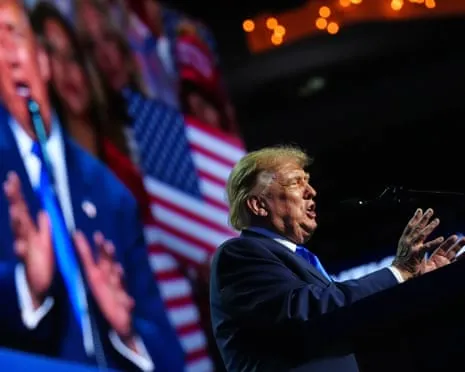
DALLAS, Texas — September 10, 2026 — President Donald Trump has promised a $5,000 payment to every adult U.S. citizen if Republicans maintain control of both chambers of Congress in the upcoming midterm elections, unveiling the proposal during the Republican Party’s midterm convention in Dallas.
Trump described the proposed payment as a “Trump dividend” and said the money would have to be spent within the United States. However, the president did not provide detailed information on how the programme would be funded or how it would be implemented.
Trump Links Payment to Republican Victory
The announcement came as Trump sought to energise Republican voters ahead of the November congressional elections.
The president presented the proposed payment as a benefit that Americans could receive if Republicans succeed in retaining control of Congress.
The plan has immediately attracted attention because of the enormous potential cost involved. Estimates based on the number of eligible adult citizens put the overall cost at more than $1 trillion.
Trump has not yet provided a detailed legislative framework for the proposal, leaving questions over its funding, eligibility requirements and the congressional approval that would likely be necessary.
Vance Offers Further Details
Vice President JD Vance, who is expected to play an increasingly prominent role within the Republican Party, has indicated that the proposed payment may not apply to wealthier Americans.
Vance has also pointed to tariff revenue as a possible source of funding for the programme. However, analysts have questioned whether tariff collections would be sufficient to finance payments on the scale Trump has proposed.
The funding question is likely to become a major part of the political debate surrounding the proposal, particularly as the United States continues to face a substantial federal deficit and elevated government debt.
Economic and Political Questions
The proposed dividend has generated debate over its potential economic consequences.
Supporters could argue that a large direct payment would put additional money into the hands of American households and potentially increase consumer spending.
Critics, however, have raised concerns that financing such a programme through additional borrowing could increase pressure on the federal budget and potentially contribute to inflation. Analysts estimate that distributing $5,000 to roughly 240 million adult citizens would require approximately $1.2 trillion.
There are also questions surrounding the political structure of the proposal because the payment has been explicitly linked to the outcome of the congressional elections.
Vance Steps Into the Spotlight
The announcement also comes as Vice President JD Vance takes on a more prominent role in the Republican Party’s midterm campaign.
Vance is scheduled to deliver the keynote address at the Republican gathering in Dallas, an appearance that is attracting additional attention because he is widely viewed as a potential leading figure in the party’s future.
With Trump constitutionally unable to seek a third presidential term, Vance’s growing national profile has fueled speculation about his potential ambitions for the 2028 presidential election.
His appearance at the convention could therefore serve not only as a campaign moment for the current midterms but also as an opportunity to define his political identity within a Republican Party still heavily influenced by Trump.
A High-Stakes Midterm Campaign
The Republican Party enters the midterm campaign facing significant political challenges, with economic concerns, inflation and the cost of everyday goods weighing on voters.
Trump has sought to make the 2026 elections a referendum on his administration and Republican control of Congress, urging supporters to turn out and protect the party’s legislative agenda.
The proposed $5,000 dividend adds another major economic promise to the campaign, but its feasibility and financing are expected to remain subjects of intense political and economic scrutiny.
For now, the proposal remains a political pledge rather than an approved government programme, with important questions still unanswered about its funding, eligibility and implementation.


