


Coral reefs are among the most valuable ecosystems in the world. Often described as the rainforests of the sea, they provide shelter and breeding grounds for marine life, support fisheries, contribute to tourism and help protect coastlines by reducing wave energy and limiting coastal erosion and damage from storms.
Millions of people depend on healthy coral reefs for food, employment and income. When these ecosystems deteriorate, the consequences extend beyond marine life. Fishing communities can lose their livelihoods, food security can become less reliable, and coastal settlements become more vulnerable to erosion and flooding.
Unfortunately, coral reefs are under increasing pressure from rising ocean temperatures, pollution, overfishing and coastal development. According to the International Union for Conservation of Nature (IUCN), 96 per cent of assessed warm, shallow-water coral reef ecosystems are classified as Critically Endangered. Its October 2026 global assessment also found that nearly all assessed coral reef ecosystems face an extremely high risk of collapse by 2075.
Against this background, the recent funding announcement represents an important step towards strengthening coral reef protection and supporting the communities that depend on these ecosystems.
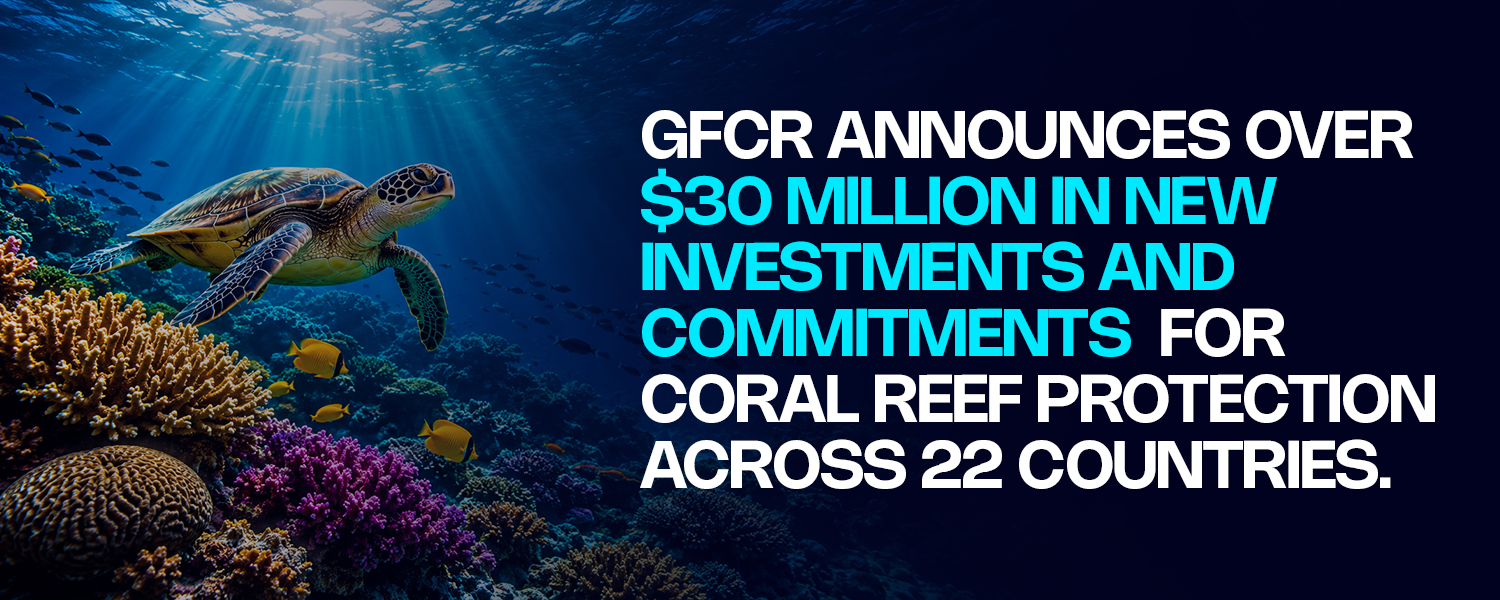
On 17 November 2026, the Global Fund for Coral Reefs (GFCR) announced more than US$30 million in new investments and donor contributions to scale up coral reef protection across 22 developing countries. The announcement was made at the United Nations Climate Change Conference (COP31) in Antalya, Türkiye.
According to the United Nations Environment Programme (UNEP), the funding package brings together new government commitments, investments for conservation projects and financing mechanisms designed to unlock more capital for businesses and coastal communities whose activities support coral reef protection.
It is important to note that the announced amount is not entirely money already distributed to conservation projects. According to the GFCR, more than US$10 million represents newly approved investments, while more than US$20 million comes from new and renewed commitments by government partners. What makes this development particularly encouraging is that it goes beyond simply protecting coral reefs. It also seeks to improve the economic conditions of the people who depend on them.
Another encouraging aspect is the involvement of financial institutions. According to the GFCR, partnerships with local banks and investors are helping to expand access to financing for businesses that provide environmental solutions. Through these arrangements, businesses involved in sustainable fisheries, seaweed farming, wastewater treatment and waste management can access financial support to develop activities that benefit both people and marine ecosystems.
This means conservation can create economic opportunities rather than being viewed only as an expense.
The announcement also highlights specific investments in different countries. In the Philippines, for instance, Blue Alliance will expand its work to strengthen the management of marine protected area networks covering nearly one million hectares across Mindoro and Northeast Palawan. The initiative is expected to benefit more than 1.1 million people in surrounding communities.
In Tanzania’s Zanzibar region, Blue Alliance will work towards closing the financing gap for the Pemba Channel Conservation Area and establishing another large conservation area. The initiative is expected to provide direct adaptation benefits to approximately 21,000 coastal community members through reef-positive businesses and conservation measures
This announcement demonstrates how environmental protection and economic development can work together. Protecting coral reefs is not just about preserving beautiful underwater landscapes; it is about safeguarding food systems, employment, biodiversity, coastal infrastructure and the livelihoods of communities.
However, the success of these investments will ultimately depend on how effectively the commitments are implemented, whether additional funding is attracted and whether local communities experience lasting benefits.
Why should this concern us when we don’t have extensive coral reef systems everywhere around us? Because the ocean is connected!
Healthy marine ecosystems support fisheries, food security, biodiversity and coastal economies. Although the effects of coral reef degradation are often felt most directly by nearby communities, they can also extend further through international seafood trade, tourism and the wider loss of marine biodiversity.
For countries with little to no coastal reef communities, protecting marine ecosystems is equally important. Our coastal communities, fisheries and marine resources are part of the wider ocean system that supports livelihoods and food security.
Protecting coral reefs is therefore not just a responsibility for countries with extensive coral reef systems. It is part of a wider global effort to protect our oceans and the people who depend on them.

