


Have you ever seen plastic bottles or wrappers stuck in bushes, flowers, or grass during your morning runs in your estate? I’m sure you have. And do you know why? It’s partly because of gaps in the country’s plastic waste management systems and circular economy.
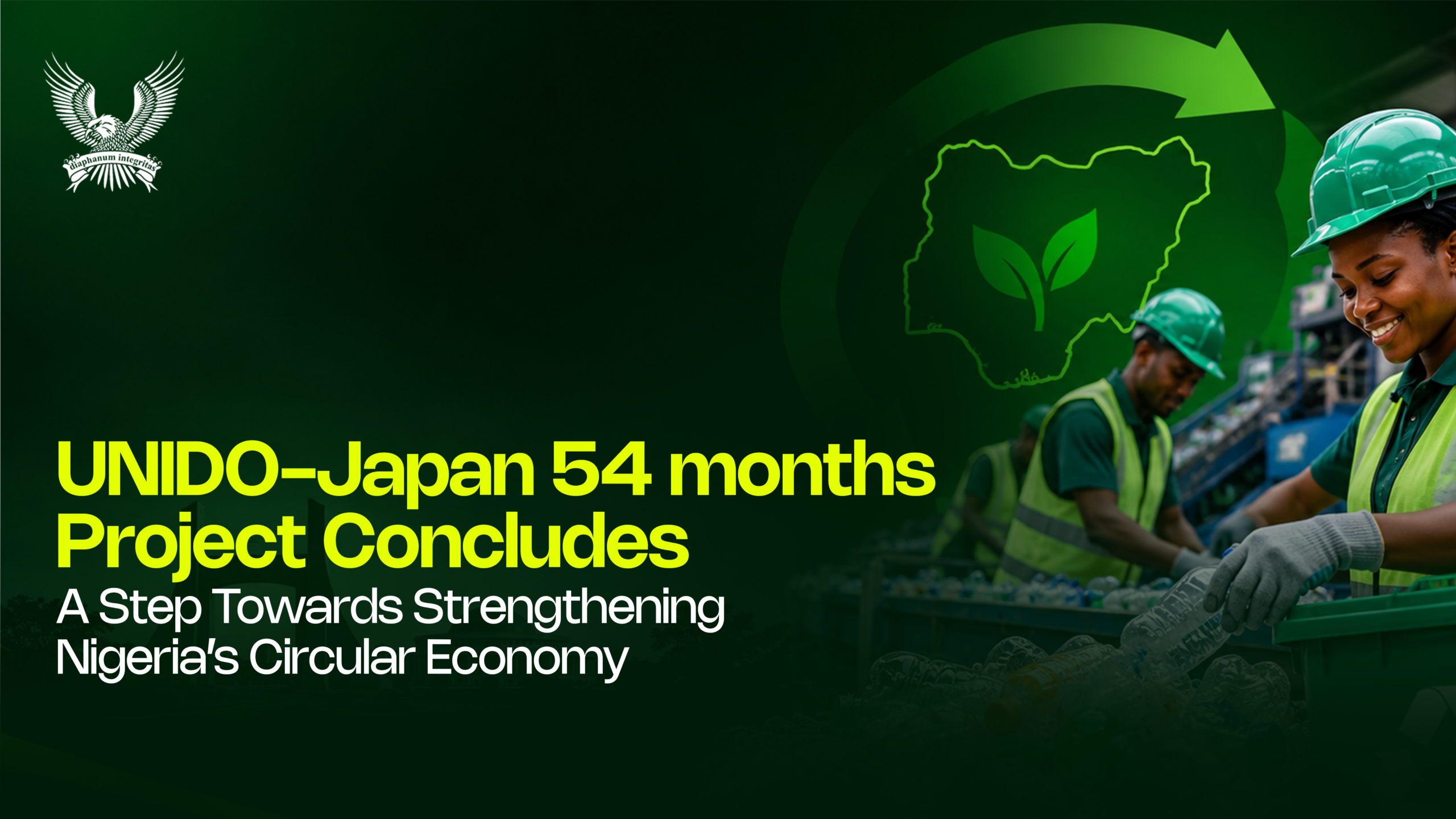
Thankfully, there are solutions to this, and one such solution was the four and half year collaboration between the United Nations Industrial Development Organization (UNIDO), Nigeria’s Federal Ministry of Environment, and other stakeholders, funded by the Government of Japan, to strengthen Nigeria’s plastic value chains through circular economy practices and resource efficiency.
According to the United Nations Industrial Development Organization (UNIDO), Nigeria has made progress in turning plastic waste into useful materials instead of allowing it to pollute the environment. With approximately $2.16 million in funding from the Government of Japan, the project supported the development of implementation guidelines for Nigeria’s National Policy on Plastic Waste Management, trained 250 informal waste pickers, and helped nine businesses adopt more resource-efficient production practices.
Organisations such as Chanja Datti, Polysmart, Alef, Ecobarter, Environmental Expressions Limited (EEL), and Switch Recycling participated in the initiative. The project also involved the Food and Beverage Recycling Alliance (FBRA), the Abuja Environmental Protection Board (AEPB), and the Lagos Waste Management Authority (LAWMA). According to UNIDO, these efforts contributed to increased plastic collection, improved production efficiency, and the creation of green jobs. This initiative demonstrated that plastic bottles and other waste materials can become useful resources and sources of income when people work together to recycle them.
Imagine a future with little to no plastic-clogged drainage systems, and no plastic bottles or wrappers stuck between branches during your early-morning runs or evening walks. Imagine no more plastic waste scattered all over the place, but instead, several new value chains harnessed from plastics that don’t have to be waste. This is what could be possible if Nigeria takes more steps in this direction.
The progress made through the Japanese government’s funding and UNIDO’s collaborative efforts with Nigeria is just a glimpse of what is possible if, and hopefully when, we stand on business where our circular economy is concerned.
This shouldn’t be the end, but rather a continuation and the beginning of many more initiatives that will transform what was once an inefficient circular economy into a highly efficient and functional one.
Our plastics shouldn’t end on the streets. Let’s help them end well or should I say, continue on

