









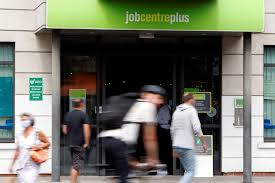
New labour market data released Tuesday show that the United Kingdom’s unemployment rate has risen to its highest level in more than a decade outside the pandemic period, while wage growth continued to moderate—developments that have reinforced market expectations of a potential interest rate cut by the Bank of England next month.
According to the Office for National Statistics (ONS), the unemployment rate increased to 5.2% in the three months to December 2025. This marks the highest level since 2015, excluding the pandemic peak of 5.3%. The ONS noted that the unemployment rate is derived from a labour force survey currently undergoing methodological improvements following lower response rates during the COVID-19 pandemic. Analysts, however, report improved data reliability in recent months.
The latest figures indicate a cooling labour market, with annual wage growth excluding bonuses slowing to 4.2% in the fourth quarter of 2025, down from 4.4% in the previous three-month period and in line with economists’ expectations. In the private sector, closely monitored by the central bank, annual wage growth excluding bonuses eased further to 3.4% in the three months to December, compared with 3.6% in the three months to November.
Financial markets responded swiftly to the data. Sterling briefly fell by more than half a cent against the U.S. dollar before partially recovering. Investors now assign roughly an 80% probability of a quarter-point interest rate reduction in March by the Bank of England, up from 65% the previous day.
Economists suggest the softening labour conditions may provide reassurance to policymakers seeking confirmation that inflationary pressures from wage growth are subsiding. The central bank has previously indicated that sustained moderation in wage increases would be a key factor in future rate decisions.
Employers and analysts attribute some of the labour market slowdown to recent policy measures introduced by Prime Minister Keir Starmer’s government, including a tax increase for employers implemented last April by Chancellor Rachel Reeves. Businesses have also expressed concern over the upcoming rise in the minimum wage and reforms aimed at expanding worker protections, both set to take effect in April.
Analysts further highlighted a rise in youth unemployment, which may reflect employers’ hesitancy to expand junior hiring amid higher payroll costs, fragile business confidence, and ongoing uncertainty surrounding economic growth.
The coming weeks will be closely watched as policymakers assess whether the latest data justify a shift in monetary policy at the March meeting.


