







U.S. Defense Secretary Pete Hegseth said Thursday that the United States has sufficient military resources to maintain its naval blockade of Iranian ports for as long as necessary, signaling that Washington is prepared for a potentially prolonged campaign of economic and military pressure against Tehran.
Speaking to reporters in Panama after addressing the crew of the guided-missile destroyer USS Gridley, Hegseth said the U.S. Navy could sustain the blockade indefinitely by rotating warships and other military assets in and out of the region.
“Indefinitely the United States Navy can maintain a blockade like that,” Hegseth said.
His comments suggest that the Trump administration believes it has the military capacity to maintain pressure on Iran while negotiations aimed at ending the conflict remain stalled.
U.S. tightens pressure on Iranian shipping
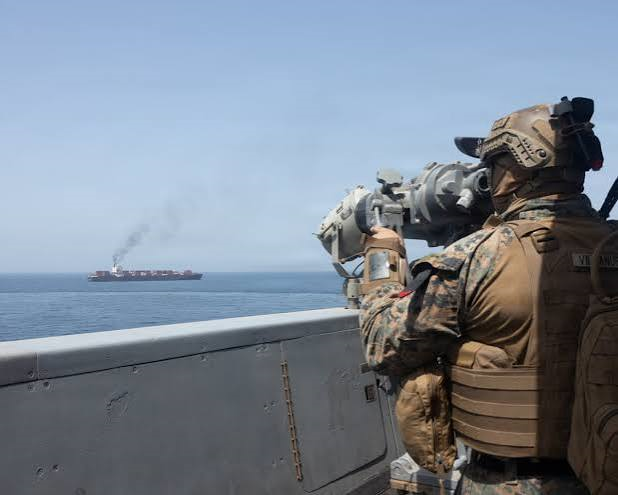
The naval blockade has become a central component of Washington’s strategy against Tehran. Since the conflict began with U.S.-Israeli strikes on Iran on February 28, the United States has deployed tens of thousands of additional troops to the Middle East, including more than 20 warships.
American forces have also intercepted commercial vessels attempting to bypass the blockade. According to the military, more than 55 commercial ships have been redirected, while three vessels were disabled and two others were boarded.
The escalation has raised concerns about the potential impact on global shipping and energy markets, particularly because Iran sits along the strategically important Strait of Hormuz.
Trump claims control of Strait of Hormuz
President Donald Trump said Wednesday that the United States had achieved what he described as “total control” of the Strait of Hormuz.
Trump declared on his Truth Social platform that the U.S. naval blockade had become a “wall of steel,” arguing that Iran had little ability to challenge American naval power in the area.
The Strait of Hormuz is one of the world’s most important energy corridors. Before the conflict, roughly one-fifth of global oil and liquefied natural gas shipments passed through the waterway.
Following the outbreak of the war, Tehran effectively shut the strait, disrupting a critical route for international energy supplies and increasing fears of further volatility in global oil markets.
Military confrontation at sea intensifies
The blockade has already resulted in direct confrontations between U.S. forces and commercial vessels.
Earlier this week, a U.S. Navy MH-60 helicopter fired two Hellfire missiles into the engine room of a Panama-flagged ship after the vessel allegedly ignored warnings from U.S. forces, according to the military.
The incident demonstrates how the blockade is moving beyond economic restrictions into increasingly direct military enforcement.
Washington says its forces will continue protecting freedom of navigation for ships traveling to and from ports outside Iran, while attempting to prevent Iranian-linked shipping from circumventing the blockade.
A prolonged standoff
Hegseth’s comments indicate that the United States is preparing for the possibility that the confrontation with Iran could continue for an extended period.
By rotating ships and personnel, the Pentagon believes it can maintain a sustained naval presence without relying on the same vessels indefinitely. This gives Washington the ability to continue applying pressure while avoiding an immediate withdrawal that could weaken the blockade.
However, maintaining such a large military operation for an unlimited period could carry significant financial, logistical and strategic costs. It could also increase the risk of further confrontations between American forces, Iranian military units and commercial vessels operating in the region.
For Iran, the blockade threatens one of its most important economic lifelines. For the United States, it represents an attempt to use overwhelming naval power to force Tehran back toward negotiations.


