









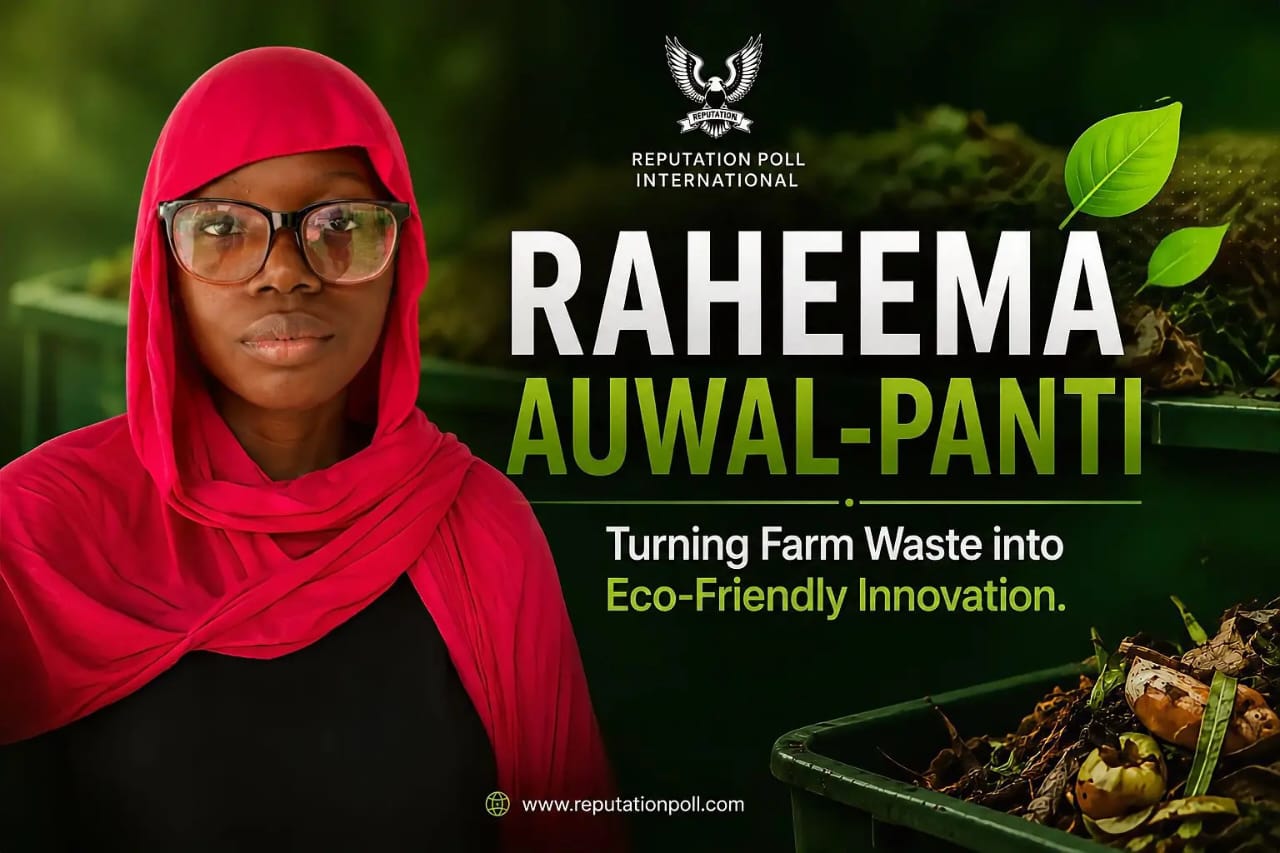
Every transformative innovation starts with someone seeing possibility where others don’t. Raheema Auwal-Panti’s work beautifully reflects that truth. At just 15 years old, the young Nigerian from Minna, Niger State, looked beyond the convenience of conventional sanitary pads and saw an environmental problem hiding in plain sight. Instead of accepting it, she imagined a better way.
Her innovation, PantiPads, turns agricultural waste like cassava peelings, banana leaves, and corn husks into biodegradable sanitary pads. By doing this, she tackles two major problems at the same time: plastic pollution and period poverty. Unlike many conventional sanitary pads, which contain plastic that can remain in the environment for hundreds of years, PantiPads breaks down naturally, showing that nature can provide cleaner and more sustainable alternatives. By using locally available farm waste, she not only reduces reliance on plastic but also promotes a circular economy, where waste is reused instead of discarded.
Her selection among the finalists for the 2026 Earth Prize reflects the global significance of her vision, but perhaps her greatest contribution is the example she sets for young people everywhere. Her words, “Even if no one does something about it, I could do something about it,” capture the essence of responsible leadership.
Raheema Auwal-Panti reminds us that innovation is not measured by age or access to vast resources. It is measured by the courage to notice a problem, the compassion to care about those affected by it, and the determination to create solutions that leave both people and the planet better than we found them.


