
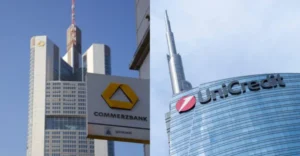







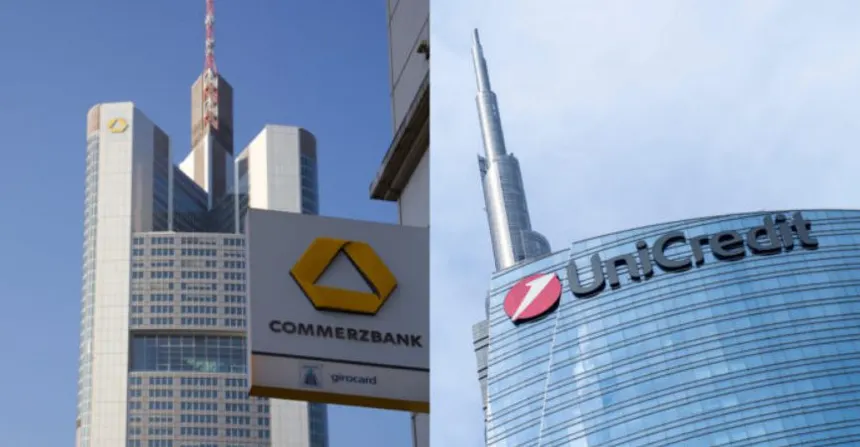
BERLIN — German Finance Minister Lars Klingbeil has outlined key conditions for any potential takeover of UniCredit over Commerzbank, as Berlin seeks to protect the bank’s role in Germany’s economy amid growing pressure for a deal.
During a meeting in Berlin with UniCredit Chief Executive Officer Andrea Orcel, Klingbeil called for negotiations to be handled responsibly and made clear that Germany would seek safeguards around Commerzbank’s future.
Germany Wants Commerzbank to Retain Its Identity
According to Germany’s Finance Ministry, the government wants Commerzbank to remain listed on the stock exchange, retain its headquarters in Frankfurt, and continue providing financing to German medium-sized companies both domestically and internationally.
The demands reflect concerns over the potential impact of a takeover on employment, corporate decision-making and lending to the country’s crucial Mittelstand sector.
Klingbeil described his discussion with Orcel as constructive while stressing that future negotiations would need to take account of the interests of all parties.
Orcel also characterized the meeting as a positive initial discussion, saying further talks would follow as both sides consider a potential way forward.
Commerzbank did not immediately comment on the meeting.
UniCredit Builds Strong Position
The meeting represents a significant development in a takeover battle that has lasted for roughly two years.
UniCredit began building its position in Commerzbank in 2024, initially catching both the German government and the bank off guard.
Berlin and Commerzbank subsequently resisted the Italian lender’s expansion, but their opposition weakened after UniCredit accumulated a stake approaching 50%.
The German government currently owns approximately 13.3% of Commerzbank, a holding that dates back to the bank’s rescue during the global financial crisis.
Focus Shifts From Blocking Deal to Protecting Germany’s Interests
With UniCredit now holding a substantial position, German officials appear to be shifting their strategy from attempting to prevent the takeover toward negotiating conditions designed to protect Germany’s economic interests.
A German Finance Ministry spokesperson said earlier that the situation was no longer simply about opposing a hostile takeover but about determining the best possible future for both banks.
One of the government’s major concerns is employment. A merger between two major financial institutions could potentially lead to overlapping operations and job reductions as the combined company seeks to improve efficiency.
Germany also wants to ensure that Commerzbank continues to play an important role in financing the country’s medium-sized businesses.
Potential European Banking Powerhouse
A combination of UniCredit and Commerzbank would create a major European banking group with more than €1.3 trillion in assets, spanning two of the euro zone’s largest economies.
Such a deal could significantly reshape the European banking landscape and strengthen UniCredit’s position among the continent’s largest financial institutions.
For UniCredit, acquiring Commerzbank would provide a substantial presence in Germany, Europe’s largest economy. For Germany, however, the transaction raises broader questions about national economic interests, corporate control and the future of one of the country’s major lenders.
Negotiations Enter New Phase
The meeting between Klingbeil and Orcel could mark a new phase in the long-running dispute.
Rather than focusing exclusively on preventing UniCredit from gaining control, German authorities are now seeking assurances about Commerzbank’s headquarters, stock-market listing, workforce and lending activities.
Klingbeil said the discussions must be conducted responsibly, while Orcel indicated that both sides would reflect on the initial meeting before continuing negotiations.
The future ownership structure of Commerzbank remains unresolved, but the latest talks suggest that Germany and UniCredit are increasingly focused on finding a negotiated path forward.
The potential transaction would be one of the most significant cross-border banking deals in Europe and could have lasting implications for Germany’s financial sector and the wider European banking indus


