






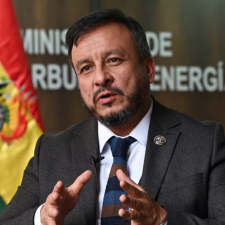
Bolivia’s centrist government has pledged to honor all existing hydrocarbons and lithium agreements in a bid to restore investor confidence after years of political and economic uncertainty, Energy Minister Mauricio Medinaceli said.
Appointed in November by President Rodrigo Paz, Medinaceli said the government would respect contracts signed by the previous leftist administration with Russian and Chinese companies, despite concerns over how some of the deals were awarded. The assurance, he said, is intended as a clear signal to investors.
“Our contracts will be respected,” Medinaceli told Reuters in an interview on January 16, adding that the commitment also applies to oil traders that supplied fuel last year and companies involved in lithium exploration. “Ideology doesn’t put food on the table,” he said, stressing that Bolivia would avoid decisions driven by geopolitical considerations.
Bolivia holds some of the world’s largest lithium and natural gas reserves, but production has lagged following nearly two decades of state control that discouraged foreign investment. The country has increasingly relied on imported fuel, including diesel from Russia, as domestic output declined.
President Paz has recently sought to repair relations with Washington and multilateral lenders after years of close alignment with Venezuela, China, Iran and Russia.
Medinaceli said the government would engage with Chinese and Russian firms whose lithium agreements have faced criticism over transparency, but emphasized that no contracts would be canceled outright. “These are companies that invested money here,” he said. “Now we must find a way to move forward within the framework of the signed contract.”
Energy Sector Reforms Planned
Bolivia is drafting a new hydrocarbons law and a separate lithium law aimed at attracting foreign investment after nationalization policies under the previous administration weighed on output. While state-owned energy company YPFB will remain involved in the sector, it will no longer dominate it, Medinaceli said.
The proposed reforms, expected in the first half of the year, include a more flexible tax and royalty regime and new contract models to encourage exploration. Medinaceli said several U.S. and regional energy firms have already expressed interest.
If approved by Congress this year, the government plans to launch new oil and gas exploration bidding rounds in 2027.
Fuel Subsidy Cuts Spark Protests
As part of broader economic reforms, the government lifted several fuel subsidies on December 18, triggering protests. Authorities have since reached agreements with major labor unions, though analysts warn that further reforms could prompt renewed demonstrations.