


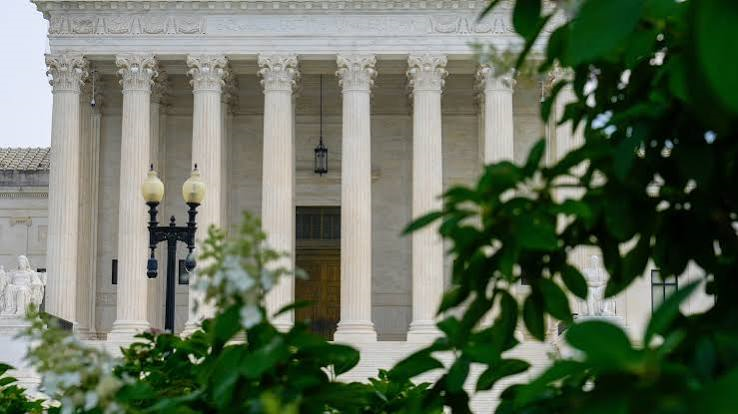
Washington, D.C. | 3 August 2026 – The United States Supreme Court has declined an emergency request to suspend enforcement of a $655.5 million civil judgment against the Palestinian Authority (PA) and the Palestine Liberation Organization (PLO), allowing the long-running legal case concerning attacks that killed and injured American citizens in Israel between 2002 and 2004 to proceed.
Justice Sonia Sotomayor, who oversees emergency applications from the relevant federal judicial circuit, denied the request without issuing a written explanation or referring the matter to the full Supreme Court. The decision leaves in place a ruling by the U.S. Court of Appeals for the Second Circuit, which reinstated the judgment earlier this year following a landmark Supreme Court ruling upholding federal legislation governing such claims.
The lawsuit was originally filed on behalf of American victims and families affected by a series of shootings and bombings in the Jerusalem area. In 2015, a federal jury awarded more than $655 million in damages after finding the Palestinian entities liable under U.S. anti-terrorism laws. The judgment was later overturned in 2016 on jurisdictional grounds before being revived after Congress enacted the Promoting Security and Justice for Victims of Terrorism Act (PSJVTA) of 2019, legislation designed to strengthen the ability of American victims of international terrorism to pursue civil claims in U.S. courts.
In 2025, the Supreme Court unanimously upheld the constitutionality of the law, paving the way for the Second Circuit to reinstate the original damages award. Monday’s decision effectively allows enforcement efforts to continue while the Palestinian organizations pursue further appeals.
The Palestinian Authority and the Palestine Liberation Organization argued that immediate enforcement of the judgment could severely affect public finances in the West Bank, warning that potential collection of tax revenues administered through Israel could disrupt essential government functions, including public security, sanitation, healthcare, and education services. They also maintained that the original judgment should no longer be enforceable, contending that previous court decisions had rendered it legally void before Congress enacted the 2019 legislation.
Representatives of the plaintiffs, however, have maintained that the judgment represents long-awaited justice for American victims and their families, emphasizing that the legal process has been reaffirmed through multiple levels of judicial review, including the U.S. Supreme Court.
Legal analysts note that the case carries significant implications beyond the parties involved, reinforcing Congress’s authority to establish jurisdictional frameworks for terrorism-related civil litigation and highlighting the continuing evolution of U.S. laws designed to provide legal remedies for victims of international terrorism.
The litigation remains one of the most closely watched terrorism-related civil cases in the United States, with its final outcome expected to influence future lawsuits involving foreign governments and organizations accused of supporting or facilitating acts of terrorism against American citizens abroad.

