









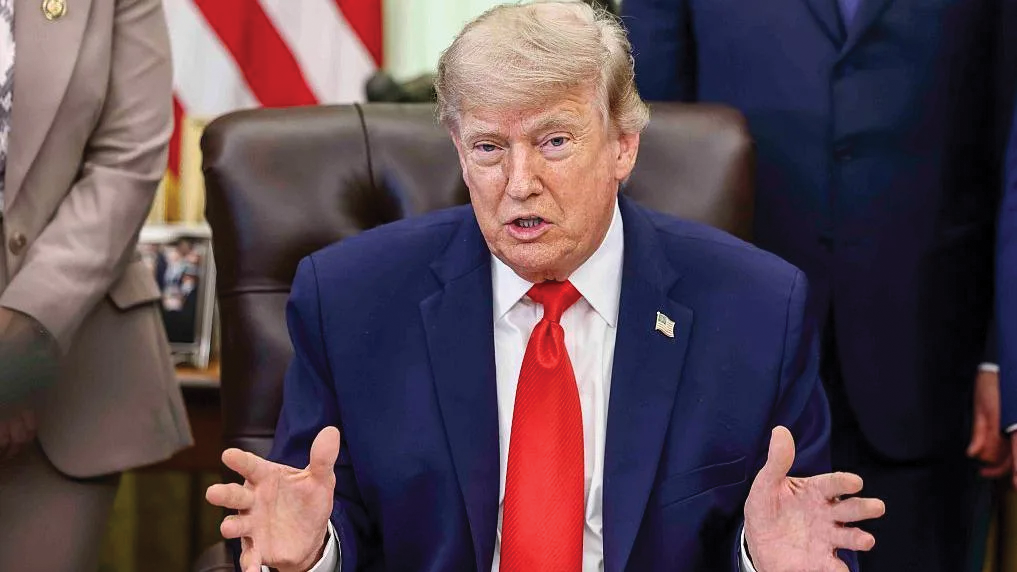
Washington, D.C. – July 2026 – U.S. President Donald Trump has intensified his focus on election security ahead of the November midterm elections, calling on Congress to strengthen election safeguards while renewing concerns over foreign influence and voter integrity during a nationally televised address from the White House.
In a prime-time speech lasting nearly 30 minutes, President Trump announced the declassification of documents that he said highlighted vulnerabilities in U.S. election systems and alleged that China sought to influence the 2020 presidential election. The President argued that the documents underscored the need for stronger election protections and greater transparency.
Renewed Push for Election Integrity Legislation
Central to the President’s address was a renewed appeal for congressional approval of the SAVE America Act, legislation that would introduce enhanced voter identification and citizenship verification requirements for federal elections.
President Trump urged Republican lawmakers to prioritize the bill, describing it as a critical step toward restoring public confidence in the nation’s electoral process. The legislation remains pending in the U.S. Senate amid continued opposition from Democratic lawmakers.
Claims of Foreign Election Influence
During the address, President Trump stated that recently declassified intelligence documents revealed that China had obtained extensive U.S. voter information and suggested that aspects of the country’s activities had not been fully disclosed by elements of the intelligence community.
The President also claimed that his administration had identified more than 275,000 non-citizens registered to vote across four states and pledged continued efforts to strengthen election security nationwide.
However, previously released U.S. intelligence assessments have stated that there was no evidence that any foreign government altered voter registrations, ballots, vote tabulations, or election results during the 2020 presidential election. Intelligence reports have acknowledged that China has collected publicly available information on U.S. politics and elections over many years but concluded there was no evidence of successful interference in the election’s technical infrastructure.
China Rejects Allegations
China’s Ministry of Foreign Affairs strongly rejected the President’s claims, describing them as “totally fabricated” and reaffirming Beijing’s longstanding position that it does not interfere in the internal affairs or elections of other countries.
Chinese officials urged the United States to avoid politicizing bilateral relations and called for continued efforts to promote constructive engagement between the two nations.
Election Security at the Center of Midterm Campaign
The President’s remarks come as Republicans prepare for closely contested midterm elections in November. Alongside highlighting his administration’s economic and immigration policies, President Trump positioned election integrity as a defining issue of the campaign.
While emphasizing the importance of election security, the President also referenced ongoing legislative priorities and broader national policy achievements.
Political Debate Continues
The speech drew immediate responses from political leaders across the spectrum. Democratic lawmakers disputed the President’s interpretation of the declassified documents, citing previous intelligence assessments and multiple investigations that found no evidence of widespread fraud or foreign manipulation affecting the outcome of the 2020 presidential election.
Public opinion on the issue remains divided. Recent polling indicates that many Republican voters continue to express concerns about the integrity of the 2020 election, while election officials and numerous court rulings have consistently upheld the certified results.
As the midterm elections approach, election security is expected to remain a prominent topic in the national political debate, alongside economic policy, foreign affairs, and domestic governance.


