








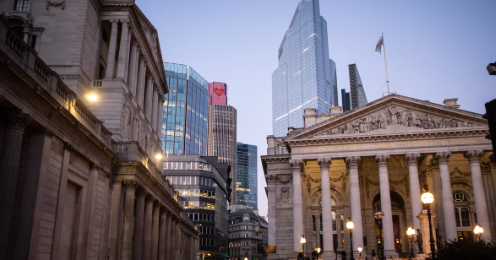
LONDON, Dec 4 — The Bank of England (BoE) announced on Thursday that it is beginning a major stress test to examine how the global private equity and private credit sectors—worth a combined $16 trillion—would cope with a severe financial shock.
The system-wide exploratory scenario will deliver its final report in early 2027. Rather than evaluating vulnerabilities at individual firms, the exercise will focus on how shocks could affect the wider UK economy.
“Private equity and private credit are increasingly important in supporting UK businesses to innovate and grow. To ensure those benefits continue, we need a strong understanding of how risks might spread through the financial system under stress,” said Deputy Governor Sarah Breeden.
According to the BoE, private equity–backed companies employ more than 2 million people in the UK.
Unlike its routine banking stress tests, the BoE cannot require all private-market firms to take part because most private equity and investment funds fall outside its direct regulatory authority and are often based overseas.
FOCUS: LARGE UK COMPANIES
Nonetheless, the central bank has secured participation from firms representing roughly one-third of UK private-equity leveraged buyout activity, half of private credit exposure to UK corporates, and 40% of jobs in private equity–funded businesses.
The stress test will be conducted in two phases, giving participating firms the opportunity to outline how they would react to one another’s decisions during a crisis. It will assess investment in large UK companies, how these investments are financed, and any spillover risks across financial markets. Venture capital for smaller firms and commercial real estate will not be included.
Participants include major global asset managers such as Apollo, Bain Capital, Blackstone, Carlyle, CVC Credit Partners, Goldman Sachs Asset Management, KKR, and Permira.
In its Financial Stability Report released Tuesday, the BoE said that while private markets have been stable so far, their rapid growth means they have yet to face a major stress event. Governor Andrew Bailey previously warned that the failures of U.S. companies First Brands and Tricolor could signal deeper vulnerabilities.
The BoE noted that these collapses highlighted how “high leverage, weak underwriting standards, opacity, complex structures, and heavy reliance on credit ratings” can create risks for both banks and credit markets.
As chair of the Financial Stability Board (FSB), Bailey has made private credit a priority concern for the G20’s global financial watchdog.
“This will be an important part of the FSB’s monitoring over the coming year,” he said in a November letter to G20 leaders.
The Bank of England has pledged to share the outcomes of its stress test with international regulators and policymakers.


