







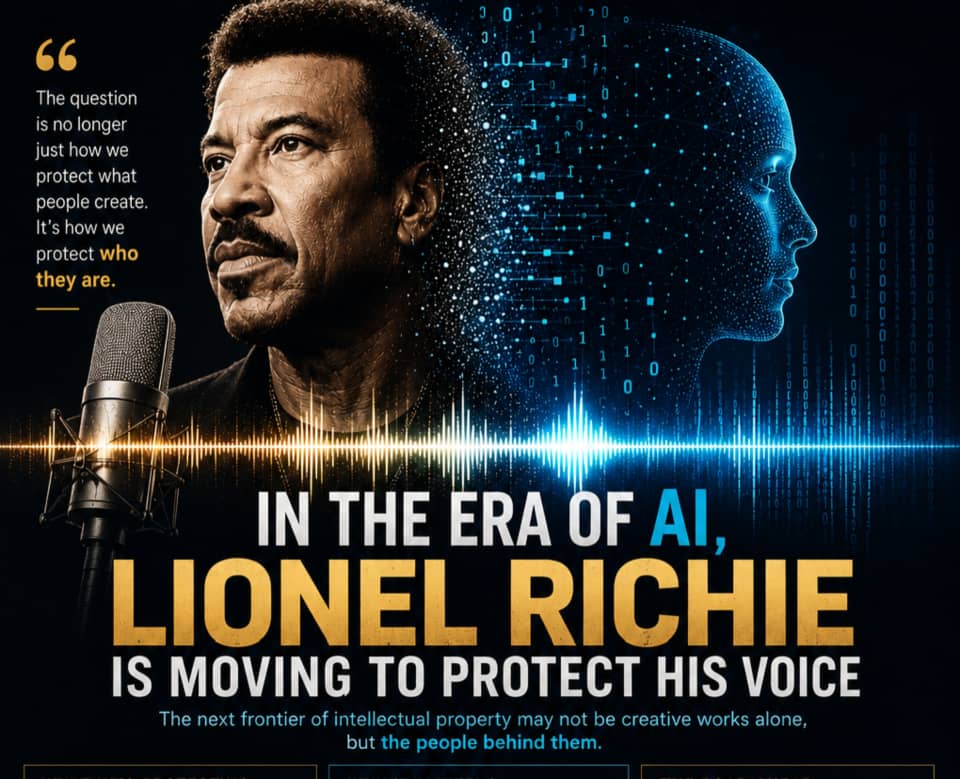
For decades, artists worried about people copying their songs. In the age of AI, they’re increasingly worried about something far more personal: AI copying their voices.
On June 11, 2026, Lionel Richie filed four trademark applications with the U.S. Patent and Trademark Office, according to filings first flagged by trademark attorney Josh Gerben of Gerben IP and reported by Billboard — the latest move in a fast-growing trend of artists trying to legally shield their voices from AI cloning.

Rather than trying to trademark his natural vocal cords — which is legally impossible — Richie’s team, through an entity called RichLion Holdings, LLC, submitted specific audio recordings of him delivering four iconic phrases from his catalog: “Hello, is it me you’re looking for?”, “Say You, Say Me,” “Easy Like Sunday Morning,” and “All Night Long.”
Copyright protects Richie’s songs as creative works, but it doesn’t stop someone from generating a new AI voice that sounds exactly like him saying something he never said. Right of Publicity laws are meant to cover a person’s voice and likeness, but they exist only at the state level, vary widely, and have historically applied mainly to unauthorized advertisements — not the flood of AI-generated clips, parody audio, and synthetic endorsements now spreading online. Trademark law, untested as it is for this purpose, is currently the closest thing to a nationwide legal framework for protecting voices against unauthorized AI use. As Ruth Zive, CMO of voice-tech platform Voices, told Billboard, filings like this are really about establishing provenance — proof that a voice came from a specific, identifiable person who authorized its use, something AI platforms currently have no consistent way to verify before a voice gets used.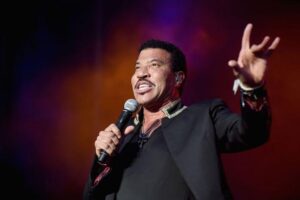

Filing the trademark is only the first hurdle. Convincing the government that a famous lyric functions as a brand identifier is a much harder challenge. The filings are on an ‘intent-to-use’ basis, trademark attorney Josh Gerben noted, meaning Richie isn’t yet using these phrases commercially as trademarks — he has to start. He must also tie the audio to specific commercial goods and entertainment services, and prove “acquired distinctiveness”: that consumers instantly recognize these precise vocal hooks as official brand identifiers rather than just catchy lyrics.
If approved, these sound marks could give Richie grounds to block unauthorized commercial use of his voice in advertising and branding. But they wouldn’t offer absolute protection. Trademark law only applies to commercial use; it can’t stop non-commercial AI parodies or people who naturally sound like him. That’s why, even with a successful filing, comprehensive protection against AI vocal replication still leans heavily on state-level Right of Publicity laws and the proposed federal NO FAKES Act, which Nairametrics reports would create a federal right covering a person’s voice and likeness.

Richie joins a growing list of artists — including Taylor Swift, who filed for “Hey, it’s Taylor” in April, and Matthew McConaughey, who trademarked his “alright, alright, alright” line in 2023, according to Billboard — making the same bet: that trademark law, built for logos and jingles, might be repurposed to defend something far more personal in the age of AI. Their filings reflect a growing recognition that the next frontier of intellectual property may not be creative works alone, but the people behind them. The question is no longer just how we protect what people create. It’s how we protect who they are.


