





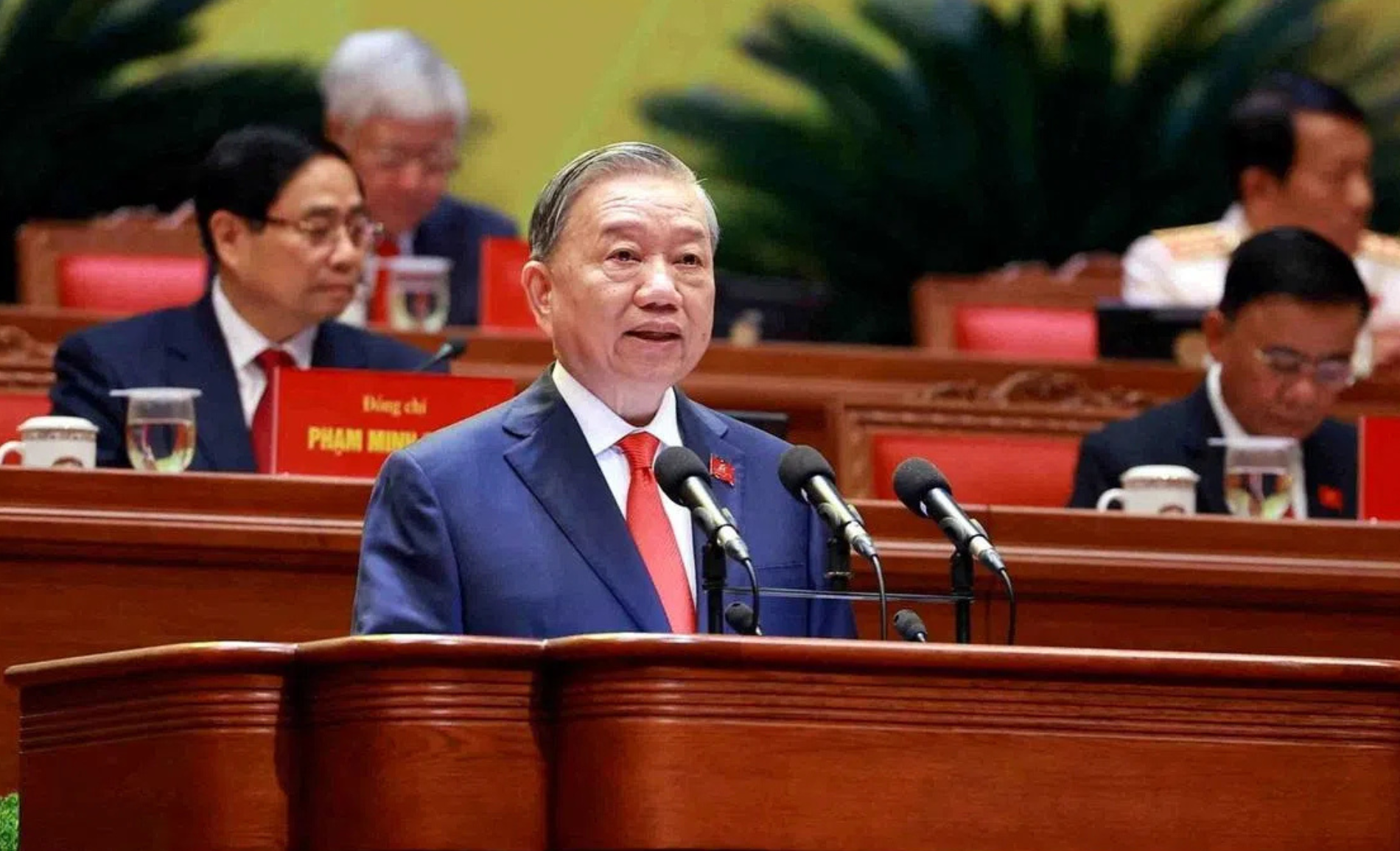
Vietnam’s top leader, To Lam, has been reappointed as General Secretary of the ruling Communist Party for a second five-year term following a unanimous vote by the party’s Central Committee, reaffirming his grip on power and signaling continuity in policy direction.
In the one-party state, Lam was elected to the party’s most powerful position by all 180 members of the newly formed Central Committee at the conclusion of the Communist Party Congress, held every five years to set leadership and policy priorities. Viewed as a bold reformist, Lam used his acceptance speech to pledge double-digit economic growth, vowing to build a governance system rooted in “integrity, talent, courage, and competence,” with performance judged by measurable outcomes.
Sweeping Reforms and Political Consolidation
Since assuming the role of party chief in mid-2024, Lam has overseen rapid economic expansion driven by sweeping reforms. These changes, aimed at accelerating decision-making and cutting red tape, won him strong backing but also sparked criticism after tens of thousands of civil servants were laid off.
Mindful of the resistance his reforms generated, Lam moved early to consolidate support among rival party factions, including the influential military, according to officials familiar with the process. As concerns grew over his perceived support for private conglomerates over state-owned enterprises, Lam issued a directive ahead of the congress reaffirming the “leading role” of state firms, including military-linked telecoms and defence giant Viettel.
“He meticulously prepares every move,” said Le Hong Hiep, Senior Fellow at the ISEAS Yusof Ishak Institute, noting that Lam skillfully navigated Vietnam’s political landscape to rise to the top in 2024 as his predecessor, Nguyen Phu Trong, struggled with prolonged health issues.
In his address to the congress following his re-election, the 68-year-old leader emphasized the importance of party unity. Lam is also seeking to assume the presidency, with an announcement expected soon.
While Lam’s continued leadership reassures foreign investors seeking political stability, Hiep cautioned that his attempt to combine the party chief and presidential roles—similar to China’s leadership model under Xi Jinping—could challenge Vietnam’s long-standing system of collective leadership and internal checks.
Ambitious Growth Targets
Earlier this week, addressing delegates in a red-carpeted hall beneath a towering statue of party founder Ho Chi Minh, Lam pledged to deliver annual economic growth exceeding 10% throughout the decade—far above the World Bank’s forecast of approximately 6.5% growth over the next two years.
To achieve this, Lam plans to overhaul Vietnam’s traditional growth model, long reliant on cheap labor and exports, and pivot toward innovation and efficiency. His goal is to transform Vietnam into a high-middle-income economy by 2030.
In his first months in office, Lam launched the most extensive reform of Vietnam’s public administration in decades and has vowed to press ahead with his agenda despite concerns over financial risks, controversial infrastructure projects, and allegations of favoritism.