









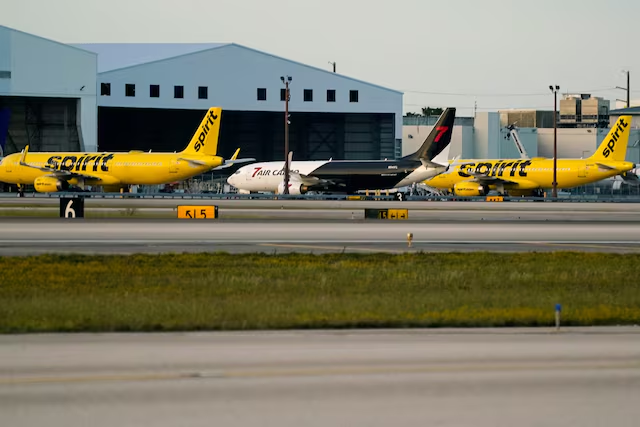
The recent grounding of Spirit Airlines is expected to provide short-term relief to the global aviation industry, which has been grappling with a significant shortage of aircraft engines.
Industry analysts indicate that the withdrawal of Spirit Airlines’ fleet comprising primarily Airbus A320-family aircraft—will release a substantial number of engines and spare parts into an already constrained market. This development comes at a critical time when airlines worldwide are facing operational disruptions due to limited engine availability and extended maintenance cycles.
The current shortage has been largely driven by ongoing technical issues affecting modern turbofan engines, particularly the geared turbofan (GTF) engines produced by Pratt & Whitney. These challenges have led to the grounding of numerous aircraft globally, creating increased demand for replacement engines and components.
With Spirit Airlines ceasing operations, aviation lessors, maintenance providers, and airline operators are expected to gain access to a pool of previously utilized engines. These assets may be redeployed, leased, or dismantled for parts, thereby helping to stabilize supply chains and return grounded aircraft to service more quickly.
However, experts caution that this relief is likely to be temporary. The structural issues affecting engine production, maintenance capacity, and supply chain logistics remain unresolved. While the redistribution of Spirit Airlines’ assets may alleviate immediate pressures, long-term solutions will require increased manufacturing output, improved maintenance turnaround times, and sustained investment across the aerospace sector.
In addition to its impact on the engine market, the grounding of Spirit Airlines marks a significant shift in the competitive landscape of the airline industry. The absence of a major low-cost carrier may lead to reduced fare competition and potential increases in ticket prices across key domestic routes.
Stakeholders across the aviation ecosystem continue to monitor the situation closely, as the redistribution of assets unfolds and broader implications for global air travel become clearer.


