









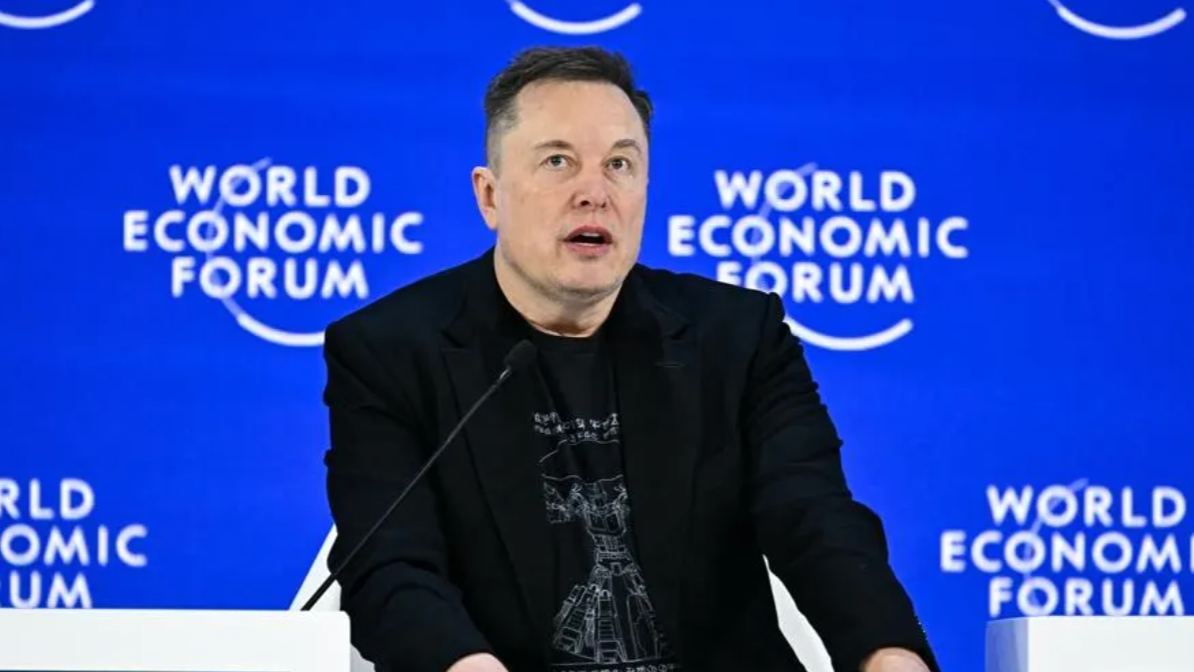
Elon Musk made a surprise appearance at the World Economic Forum in Davos on Thursday, using his debut to criticize U.S. solar tariffs while outlining ambitious growth plans for Tesla, humanoid robots, and self-driving technology.
Speaking in a wide-ranging interview with World Economic Forum interim co-chair and BlackRock CEO Larry Fink, Musk said high U.S. tariffs were undermining the economic viability of solar energy, despite the country’s vast potential to meet its entire electricity demand through solar power.
“The United States could generate all the electricity it needs from solar,” Musk said, noting that a small portion of land in states such as Utah, Nevada, or New Mexico would be sufficient. “Unfortunately, tariff barriers for solar are extremely high, which artificially inflates the cost of deployment.”
The appearance marked a shift for Musk, who has previously dismissed the Davos gathering as elitist and disconnected from everyday concerns. Fink opened the discussion by praising Musk’s influence and innovation, before steering the conversation toward artificial intelligence, robotics, reusable rockets, and Musk’s early fascination with science fiction.
Musk also highlighted aggressive targets for Tesla, including plans to sell humanoid robots as early as next year, and said regulatory approval for self-driving technology in Europe could arrive within weeks.
In recent years, Musk has grown increasingly prominent due to his close ties to U.S. President Donald Trump and his leadership of companies including SpaceX, Starlink, social media platform X, and artificial intelligence startup xAI.
While generally aligned with Trump, Musk broke ranks on renewable energy, warning that U.S. policy risks slowing the adoption of clean power at a time of surging electricity demand driven by artificial intelligence and data centers. Trump has been openly critical of renewable energy and has encouraged increased oil and gas production, while freezing approvals for major onshore wind and solar projects.
That policy stance has left thousands of megawatts of potential renewable capacity stalled, raising concerns about the U.S. ability to meet rapidly growing power needs.


